How Brands Use AI in Ads While Traditional Film and Vertical Drama Keep Rising

AI is no longer a novelty in production. It is already inside real campaigns, pitch decks, edits, test visuals, product shots, and in some cases, finished ads. At the same time, cameras are still rolling on major films, Netflix series, independent YouTube productions, and a fast-growing wave of vertical dramas made for phones.
That mix is the real story.
Big brands are not replacing production with AI in one clean move. They are testing where it saves time, where it opens new creative options, and where it still falls short. Viewers are also changing. They use AI tools for writing, search, editing photos, creating images, translating text, and planning everyday tasks. A client who had never heard of generative video two years ago may now ask whether a commercial can be made faster, cheaper, or more cinematic with AI.
The answer is yes, sometimes. But the best work still needs taste, direction, performance, lighting, story, and control.
Big brands are already using AI in real campaigns
Many global brands first used generative AI in public-facing campaigns as a way to invite participation. That made sense. It lowered risk because the AI output lived inside a controlled campaign idea rather than pretending to be a full replacement for production.
Coca-Cola is one of the clearest examples. In 2023, the company launched Create Real Magic, a platform built with OpenAI and Bain, where users could create images using Coca-Cola visual assets and generative AI tools. It was not just a tech demo. It showed how a major brand could open part of its creative system to the public while still controlling the brand world.
Heinz did something similar in 2022 with its AI Ketchup campaign. The brand used text-to-image AI tools to ask what “ketchup” looked like. Many generated images resembled Heinz-style bottles, which made the campaign’s point in a simple way: the brand was so strongly associated with ketchup that even AI seemed to reflect it. The campaign worked because the idea was clear. AI was the proof, not the whole concept.
In 2024, Toys“R”Us released a short brand film made with OpenAI’s Sora in collaboration with Native Foreign. It told a story about founder Charles Lazarus and the creation of Geoffrey the Giraffe. The film drew attention because it was one of the first high-profile brand pieces connected to Sora. It also sparked debate. Some people saw the speed and ambition. Others noticed the visual oddities that still appear in AI video.
That reaction matters. AI can impress people quickly, but audiences are getting better at spotting when something feels off.
Brands are using AI in three different ways
The phrase “AI ad” can mean several things. Some productions use AI heavily. Others use it in small but useful parts of the process. The difference matters because cost, quality, control, and legal risk change depending on how AI is used.
AI-assisted production
Hybrid production
Fully AI-generated spots
Real footage is still shot, but AI helps with storyboards, visual references, cleanup, object removal, background extension, translation, captioning, or versioning.
Live-action footage, practical locations, actors, products, and AI-generated visuals are combined into one finished piece.
The main images or video are generated through AI tools, then edited, graded, sound-designed, and refined by a creative team.
Most serious brands are living in the first two categories right now.
A fully AI-generated spot can work for a surreal concept, a speculative product film, a fashion mood piece, or a teaser where realism is not the main goal. But when a brand needs a real human performance, exact product accuracy, legal clearance, consistent packaging, or a believable location, traditional production still gives more control.
That is why many production teams now treat AI like another department. It sits beside cinematography, editing, visual effects, colour, sound, and motion design. It can reduce friction, but it does not remove the need for a director.
Where AI actually reduces production cost
AI can reduce cost, but not in the magical way some people imagine. It does not make every commercial cheap. It reduces certain costs in certain stages.
The biggest savings often show up before and after the shoot.
During pre-production, AI can help create:
Visual moodboards for directors and clients
Early storyboards and shot concepts
Location style references
Wardrobe and prop ideas
Animatics for timing
Alternate creative routes before a full pitch is built
This can help a client understand the direction faster. It can also prevent expensive confusion on set.
After the shoot, AI can help with:
Removing small unwanted objects
Extending backgrounds
Creating quick rough composites
Translating or adapting scripts
Generating subtitles
Creating multiple aspect ratios
Testing different versions for different audiences
The real value is not just “cheaper.” It is more options earlier and faster problem-solving later.
Still, AI can add costs too. A brand may need extra legal review, more time for prompt testing, extra cleanup, or manual fixes when generated details are wrong. Product labels, hands, reflections, faces, and continuity can still cause problems. Anyone who has tried to make AI video match a very specific object knows the truth: the first result can look amazing, but the final 10 percent can take real work.

Viewers and clients are adapting faster than expected
AI adoption is not only happening inside agencies and production companies. Regular people are using AI every day, often without thinking about it.
ChatGPT brought generative AI into mainstream conversation after its public release in late 2022. Since then, AI features have appeared in search tools, phones, photo apps, writing software, translation tools, music tools, and video platforms. People use AI to polish emails, plan trips, summarize articles, remove photo backgrounds, generate profile images, and make rough creative concepts.
That changes how clients think about production.
A client may now ask:
Can we preview the concept before we shoot?
Can AI help create a more cinematic product world?
Can we make five versions instead of one?
Can we avoid a full set build?
Can we combine real talent with AI backgrounds?
Can we produce vertical edits for social platforms without starting over?
These are fair questions. They are also practical questions, not hype questions.
The average viewer is also becoming more visually literate. People can enjoy AI visuals, but they can also sense when a face looks waxy, when motion feels strange, or when a scene has no emotional centre. That is why strong creative direction matters more, not less. If everything becomes easier to generate, taste becomes the filter.
Traditional filmmaking is still rising
The rise of AI does not mean traditional film production is dying. The opposite is visible across entertainment.
Netflix still invests in large-scale series and films that require actors, sets, cinematography, costumes, stunts, locations, and real production teams. Shows like Stranger Things, Wednesday, Squid Game, The Crown, and One Piece became global conversation pieces because they delivered worlds people wanted to spend time in. Their impact came from characters, performances, production design, editing, music, and craft.
Theatrical films show the same thing. In 2023, Barbie and Oppenheimer became major global events. They were not small technical demos. They were director-led films with strong visual identities and clear audience appeal. In 2024, Dune: Part Two reminded people how powerful large-format cinematography, production design, sound, and practical scale can feel in a cinema.
Independent production is also growing in its own way. YouTube channels and creator-led companies now build ambitious sets, shoot documentary-style stories, produce short films, test visual effects, and publish work directly to audiences. Channels such as Corridor Crew have helped make visual effects and production techniques more visible to general viewers. Other creator studios use small teams to make content that once required access to traditional networks.
The tools are more available. Cameras are better. Lighting is more affordable. Editing software is easier to access. Distribution is open to anyone with a strong idea and the patience to build an audience.
AI adds to that shift. It does not erase it.

Vertical drama is becoming its own production lane
One of the most interesting changes is the rise of vertical drama.
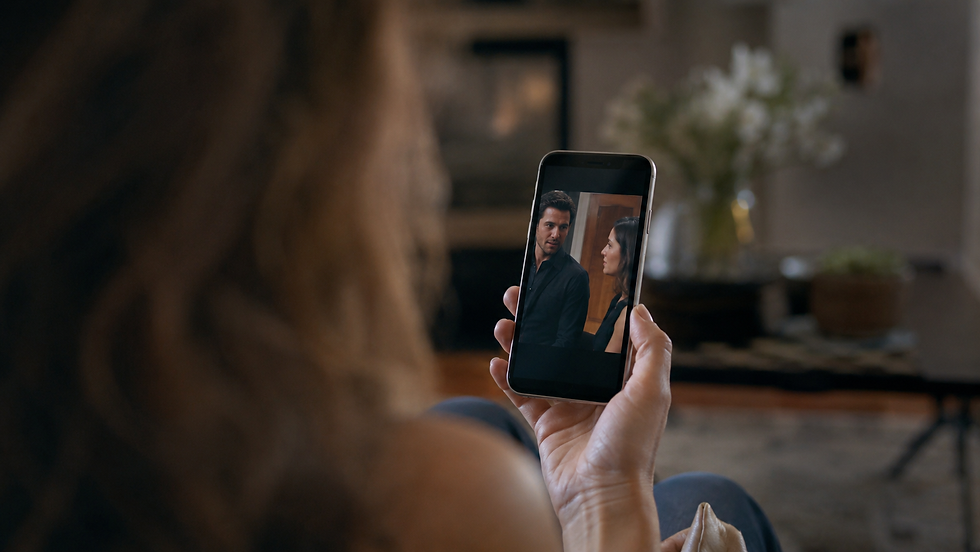
These are short scripted episodes made for phones, often in portrait format. They use fast hooks, emotional conflict, clear characters, and cliffhangers. Platforms such as ReelShort, DramaBox, ShortMax, and similar apps have pushed this format into Western markets after years of growth in parts of Asia.
Vertical drama is not the same as a traditional TV episode cut into a phone shape. It has its own rhythm. Scenes start fast. Dialogue is direct. Frames are composed for one person holding a phone, not a cinema screen. Stories often lean into romance, revenge, family secrets, wealth fantasy, betrayal, or crime because those conflicts read quickly on a small screen.
Some people dismiss vertical drama because it can feel melodramatic. That misses the point. The format is proving that audiences will watch scripted stories in new shapes if the pacing fits the device.
For brands and production companies, this matters. A cinematic ad no longer has to live only as a 30-second horizontal film. A campaign may need:
A hero film
A 15-second vertical cut
A six-second bumper
Behind-the-scenes material
AI-enhanced product visuals
Creator-style edits
Short dramatic scenes built around a product or service
The production plan has to consider all of this from the start. If vertical is treated as an afterthought, the work usually feels cropped and weak. If it is planned early, it can feel native to the platform.
The best future is hybrid production
The strongest productions will not choose between AI and traditional filmmaking. They will combine them with purpose.
AI is useful when the idea needs scale, surreal imagery, fast visual testing, or multiple versions. Traditional production is stronger when the idea needs emotion, performance, product accuracy, realism, physical texture, and trust.
A hybrid workflow can look like this:
Develop the concept with AI-assisted references and visual boards.
Shoot real footage with actors, products, or locations.
Add AI-generated environments, transitions, textures, or dream-like sequences.
Finish with professional editing, colour, sound, and human review.
Create horizontal and vertical versions that feel designed, not recycled.
That approach gives brands the best of both worlds. It keeps the human parts human. It uses AI where AI is genuinely helpful. It also protects the final piece from looking like a tool experiment.
This is where our work fits. We create hybrid cinematic ads that combine traditional production with AI-enhanced visuals. That can mean live-action shooting, AI-assisted concept development, generated backgrounds, surreal product worlds, vertical drama-style scenes, or complete AI-driven spots when the concept calls for it.
The goal is not to use AI because it is trendy. The goal is to make the final piece stronger, sharper, and more useful for the audience.
What brands should take from this shift
AI is already part of advertising production, and it will keep improving. Big brands are testing it because it can speed up concepting, lower some production barriers, and open visual ideas that would have been too expensive before.
But the rise of AI does not cancel traditional filmmaking. Netflix series, theatrical films, independent creator productions, and vertical dramas all show that filmed stories still have power. Audiences respond to emotion, rhythm, faces, voices, tension, beauty, humour, and craft.
The smart move is not to ask, “Can AI replace this?”
A better question is, “Where does AI help, and where do we need the camera, the crew, the actor, the real location, and the human eye?”
That is the future of production for brands: not fully artificial, not stuck in the past, but hybrid by design.


Comments